
Tryptophan: The Feel-Good Amino Acid Your Body Can't Make (But Deeply Needs)
When we think about nutrients for sleep, mood, and long-term health, magnesium and omega-3s often steal the spotlight.
But there's another quiet hero working behind the scenes: tryptophan.
Tryptophan is an essential amino acid — meaning your body cannot make it on its own. You must get it from food.
And while it doesn't get much fanfare, we believe it should. Tryptophan plays a critical role in sleep quality, emotional resilience, metabolic health, brain function, and healthy aging.
Let's take a closer look at what tryptophan is, why it matters, how to get enough, and how nutrient-dense foods like chlorella and spirulina can support your body's natural rhythms.
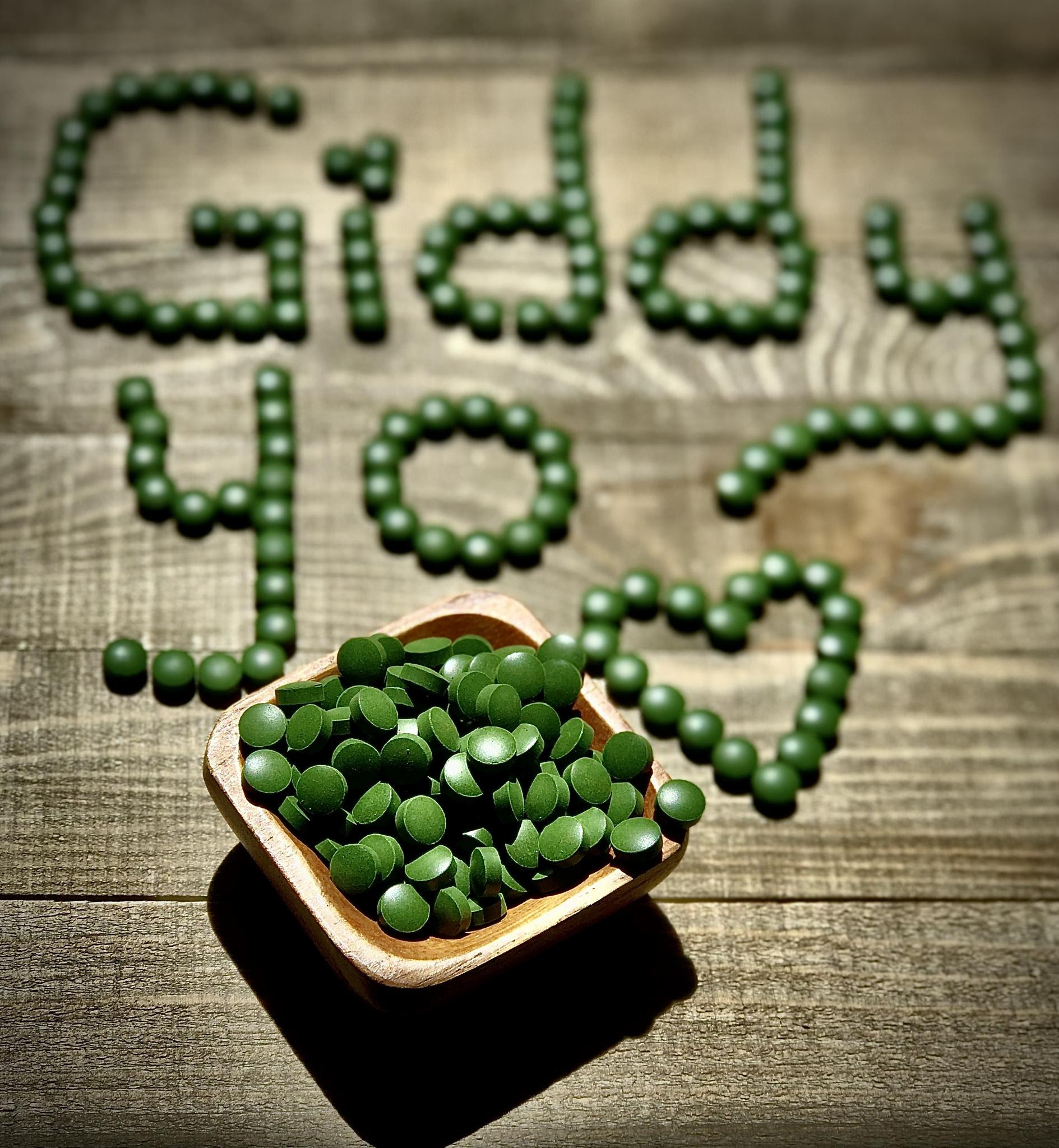
Here's a brief, high-level AI generated summary —perfect for skimmers!
- Tryptophan is an essential amino acid your body can't make—you get it from food.
- It's a key building block for serotonin (mood & stress balance), melatonin (better sleep), and niacin/B3 (energy & brain health).
- Supports: good sleep, stable mood, focus, appetite control, muscle recovery, and healthy aging.
- Daily need: ~280–420 mg (modest amount from protein-rich foods) based on body weight.
- Top sources: soy/edamame, seeds (pumpkin/chia), nuts, oats, hard cheeses, turkey/chicken, etc.
- Pair with carbs (e.g., banana + oats) for better brain uptake.
- Low levels may show as: poor sleep, mood dips, cravings, brain fog, or stress sensitivity.
- Giddy Yo Spirulina (~84 mg per 10g) + Chlorella (~69 mg per 10g): High tryptophan density per gram (beats many foods gram-for-gram), complete proteins with all essentials.
- They help most by providing co-factors (B vitamins, magnesium, iron) to convert tryptophan → serotonin/melatonin, plus gut support (chlorella) and energy/mood boost (spirulina).
- Spirulina: Daytime ally for clarity, stress resilience, energy.
- Chlorella: Evening/deep support for sleep, gut-brain calm, longevity.
- Not main sources alone (small servings), but excellent nutrient-dense add-ons to enhance tryptophan's benefits—third-party tested for purity & taste.
Quick takeaway: Add your Giddy Yo greens daily to support mood, sleep, and feeling great long-term! 
What Is Tryptophan?
Tryptophan is one of the nine essential amino acids used to build proteins in the body. But its importance goes far beyond muscle and tissue repair.
Tryptophan is the starting material your body uses to produce:
- Serotonin, which supports mood, emotional balance, and stress resilience
- Melatonin, the hormone that regulates sleep–wake cycles
- Niacin (vitamin B3), which supports energy metabolism and brain health
Because of this, tryptophan sits at the intersection of mood, sleep, cognition, and longevity.
Why Tryptophan Is Important for Longevity
As we age, maintaining balanced neurotransmitters, deep sleep, and metabolic flexibility becomes increasingly important — and often more challenging.
Adequate tryptophan intake supports:
- Restorative sleep, essential for cellular repair and brain health
- Mood stability and emotional resilience
- Cognitive function, including focus and memory
- Healthy appetite regulation and blood sugar balance
- Muscle maintenance and recovery as part of overall protein intake
In other words, tryptophan helps your body do the behind-the-scenes work that allows you to age well and feel great.
How Tryptophan Affects Sleep
Tryptophan is best known for its role in sleep, and for good reason.
Here's the pathway:
Tryptophan → Serotonin → Melatonin
Tryptophan → Serotonin → Melatonin
When your body has enough tryptophan — along with key co-factors like vitamin B6, magnesium, and adequate and appropriat carbohydrate intake — it can efficiently produce serotonin during the day and melatonin at night.
This supports:
- Falling asleep more easily
- Staying asleep longer
- Improving overall sleep quality
Because sleep is foundational to metabolic health, emotional regulation, and cognitive longevity, this pathway becomes even more important over time.
How Much Do I Need?
The Estimated Average Requirement (EAR) for adults is approximately 4–5 mg per kg of body weight per day.
This corresponds to a Recommended Dietary Allowance (RDA) or safe intake level of around 5–6 mg/kg/day to meet the needs of nearly all healthy adult individuals.
Where Tryptophan Is Found Naturally
Tryptophan is found in protein-containing foods, particularly whole, minimally processed sources.
Top vegan sources, ranked approximately by density (mg per typical serving):
- Soybeans/ Edamame ~400–535 mg per cup
- Tofu ~ 235–300 mg per ½ cup (or ~590 mg per 100g in some dense forms)
- Soy Products (tempeh, soy milk, soy flour)
- Pumpkin Seeds (pepitas) Very concentrated, ~190 mg in 30g (a small handful)
- Sesame Seeds ~130 mg in 30g seeds or high in tahini spreads
- Sunflower Seeds ~115 mg in 30g
- Chia Seeds around ~700+ mg per 100g
- Oats/ Oat Bran Uncooked oats or oat bran offer ~300–365 mg per cup
- Lentils ~220 mg per 100g cooked (or per cup serving)
- Giddy Yo Spirulina contains 84 mg/ per 10 g (or 840 mg/ 100 g) serving, and our chlorella contains 68.7 mg/ 10 mg serving (ie 687 mg / 100 g serving). As a percentage our greens contain a higher concentration of tryptophan per gram then all the aforementioned foods, however as a general rule we don't consume 100 g of microalgae in one sitting, or even daily!
- Nuts (walnuts, pistachios, cashews, peanuts) ~ 70–90 mg per ounce
- Whole grains (buckwheat, quinoa, oats)
- Veggies (broccoli, mushrooms, spinach, watercress, peas)
- Fruit (the best and notable- avocado, plantains, bananas, pineapple, kiwi, guava, jackfruit, plums, dates, prunes, cherries, apricots, figs, and tomatoes). But fruit alone won't meet daily tryptophan needs (280–420 mg for average adults, 56–84 kg person), but they add up in a varied diet and offer other benefits worth mentioning.
Top Animal Based sources, focused on common options available in North America:
- Parmesan (Hard/aged cheeses generally lead in tryptophan per gram because of their high protein concentration and low water content) ~560 mg per 100g
- Cheddar ~320–558 mg per 100g
- Mozzarella ~515–550 mg per 100g
- Other Hard cheeses (e.g., Romano, Swiss) ~400–500 mg per 100g
- Lean Chicken breast (cooked) ~400–687 mg per 100g
- Turkey (breast or lean cuts, cooked) ~400–612 mg per 100g
- Beef lean cuts like skirt steak or roast, cooked) — ~230–636 mg per 100g
- Pork (lean chops or roast, cooked) ~250–400+ mg per 100g
- Fish (e.g., salmon, sockeye or farmed Atlantic, cooked) ~220–570 mg per 100g
- Eggs (whole, large)~150–197 mg per 100g
How well you absorb and utilize tryptophan matters just as much as intake — which is where highly nutrient-dense foods can make a meaningful difference.
PRO TIP: For a serotonin boost, pair tryptophan-containing fruits with complex carbs (e.g., banana with oats, pineapple in a smoothie with chia seeds, or avocado on whole-grain toast). This reduces competition from other amino acids and helps more tryptophan reach the brain.
Signs You May Not Be Getting Enough Tryptophan
While true deficiency is uncommon, many people may not be getting optimal amounts — especially during periods of stress, poor sleep, intense exercise, or restrictive diets.
Signs you may not be getting enough tryptophan include:
- Difficulty falling or staying asleep
- Low or fluctuating mood
- Increased irritability or anxiety
- Sugar or carbohydrate cravings
- Poor stress tolerance
- Brain fog or trouble focusing
- Low motivation or emotional flatness
Because tryptophan is closely tied to gut and brain health, these signs often overlap with digestive imbalance and chronic stress.
Spirulina and Chlorella: How These Superfoods Support Tryptophan Pathways
Both spirulina and chlorella are nutrient-dense microalgae and complete plant-based proteins, meaning they contain all nine essential amino acids, including tryptophan.
While neither is a primary tryptophan source on its own due to the small amounts typically consumed on a daily basis (1g- 10g), both play an important supportive role in helping the body use tryptophan effectively.
Spirulina: Supporting Energy, Mood, and Stress Resilience
Giddy Yo Spirulina contains 84 mg of tryptophan per 10 g of spirulina and is especially valued for its role in daytime energy and neurotransmitter support.
Spirulina provides:
- Complete protein, including tryptophan
- B vitamins that help convert tryptophan into serotonin
- Phycocyanin, a powerful antioxidant that supports inflammation balance
- Iron and trace minerals that support energy and oxygen delivery
Because of this, spirulina is often associated with:
- Improved mental clarity
- Mood support during periods of stress
- Metabolic and immune resilience
Spirulina is best thought of as a daytime ally — supportive, energizing, and protective.
Chlorella: Deep Nourishment for Gut Health, Sleep, and Longevity
Giddy Yo Chlorella contains 69 mg of tryptophan per 10 g, but its real strength lies in how it supports the entire system involved in neurotransmitter production.
Chlorella offers:
- Complete protein with naturally occurring tryptophan
- Chlorophyll and fibre, which support gut health and detox pathways
- B vitamins, magnesium, and iron to support nervous system balance
- Improved nutrient absorption — something that becomes increasingly important with age
Because the gut and brain are deeply connected, chlorella's digestive support can indirectly enhance serotonin and melatonin balance, making it especially valuable for:
- Sleep quality
- Emotional resilience
- Cognitive longevity
- Long-term metabolic health
This is why we view spirulina and chlorella as a foundational longevity food, and why we choose third-party tested microalgae powders and tablets at Giddy Yo to ensure purity, quality and excellent taste.
Try This Today: Simple Ways to a Maximize Tryptophan Uptake Naturally
- Pair protein-rich foods with complex carbohydrates to help tryptophan reach the brain
- Support digestion with fiber-rich, nutrient-dense foods
- Consider spirulina earlier in the day and chlorella later on
- Prioritize consistent sleep and meal timing
- Eat enough total protein, especially during periods of stress or aging.
- - - - -
A Gentle Reflection
Longevity isn't about chasing a single nutrient — it's about daily nourishment that supports your body's natural intelligence.
Tryptophan reminds us that mood, sleep, digestion, and aging are deeply interconnected. When we support those connections with care, the benefits ripple outward — into calmer nights, clearer days, prevention of dis-ease, and steadier well-being.
That's the kind of nourishment we believe in at Giddy Yo.
Scientific References & Further Reading
- Richard, D. M., Dawes, M. A., Mathias, C. W., et al. (2009). L-Tryptophan: Basic metabolic functions, behavioral research and therapeutic indications. International Journal of Tryptophan Research.
(Overview of tryptophan metabolism, serotonin and melatonin pathways.) - Fernstrom, J. D. (2013). Large neutral amino acids: dietary effects on brain neurotransmitters. Journal of Nutrition.
(Explains how tryptophan crosses the blood–brain barrier and why food pairing matters.) - Silber, B. Y., & Schmitt, J. A. J. (2010). Effects of tryptophan loading on human cognition, mood, and sleep. Neuroscience & Biobehavioral Reviews.
(Links tryptophan intake with sleep quality and emotional regulation.) - O'Neill, B. V., & Kalveram, K. T. (2019). Nutritional modulation of serotonin and melatonin. Nutrients.
(Discusses dietary co-factors including B vitamins and magnesium.) - Martín-Pérez, M., et al. (2020). Chlorella vulgaris as a functional food: Nutritional composition and health effects. Journal of Food Science & Nutrition.
(Covers protein content, amino acids, and gut-supportive benefits.) - Martín, M. A., Ramos, S. (2016). Cocoa polyphenols in oxidative stress and metabolic health. Molecular Nutrition & Food Research.
(Highlights cacao's role in brain health, metabolism, and longevity pathways.)